
There is (uma coisa) e there are (várias) dizem que algo existe: é o nosso tem e o nosso há. There is a bank near here. There are two options. A negativa é there isn't / there aren't, a pergunta é Is there…? / Are there…?, o passado é there was / there were e o futuro é there will be. O erro que entrega o brasileiro é traduzir o tem ao pé da letra: Has a bank here, There have a problem, There had a party. Para existência, o inglês nunca usa have.
Em português, o ter faz dois serviços: eu tenho um carro (posse) e tem um carro na garagem (existência). O inglês separa: posse é have, existência é there is / there are. É por isso que o brasileiro diz Has a pharmacy here? e o americano não entende de primeira. Esta página sobe em seis degraus, do mais fácil ao que mais derruba. Em cada um você lê a regra, responde um quiz e, pelo caminho, ouve três textos com a tradução ao toque: a Anna e o Mark brigando entre Paris e Roma, o Tom conversando com uma marciana e uma rua que mudou em quinze anos. Lá no topo, o Whack-a-There treina o mesmo em quatro jogos: presente (degraus 1 a 4), passado (degrau 5), futuro (degrau 6) e tudo misturado.
Antes da toupeira, monte as frases. São frases curtas do dia a dia de trabalho (reunião, cliente, prazo, orçamento), em quatro grupos: presente, passado, futuro e tudo misturado, sempre com afirmativa, negativa e pergunta no meio. Arraste cada palavra para o lugar até a frase fechar; aí você ouve a frase e vê a tradução.
Arraste as palavras para pôr a frase em ordem. No celular, também dá para tocar numa palavra e depois no lugar onde ela vai. As setas passam de uma frase para a outra.
There is e there are, a negativa com isn't / aren't e a pergunta com Is there…? / Are there…?, tudo misturado.
As frases sobem dos buracos. Bata nas certas e deixe as erradas descerem: a isca é o tem do português traduzido ao pé da letra (has a bank, there have, there had, there will have) ou a concordância trocada (there is two), e quem bate nela lê o motivo na hora. Escolha presente, passado, futuro ou tudo misturado: o jogo guarda o recorde de cada um.
🎮 Whack-a-There: presente, passado, futuro ou tudo
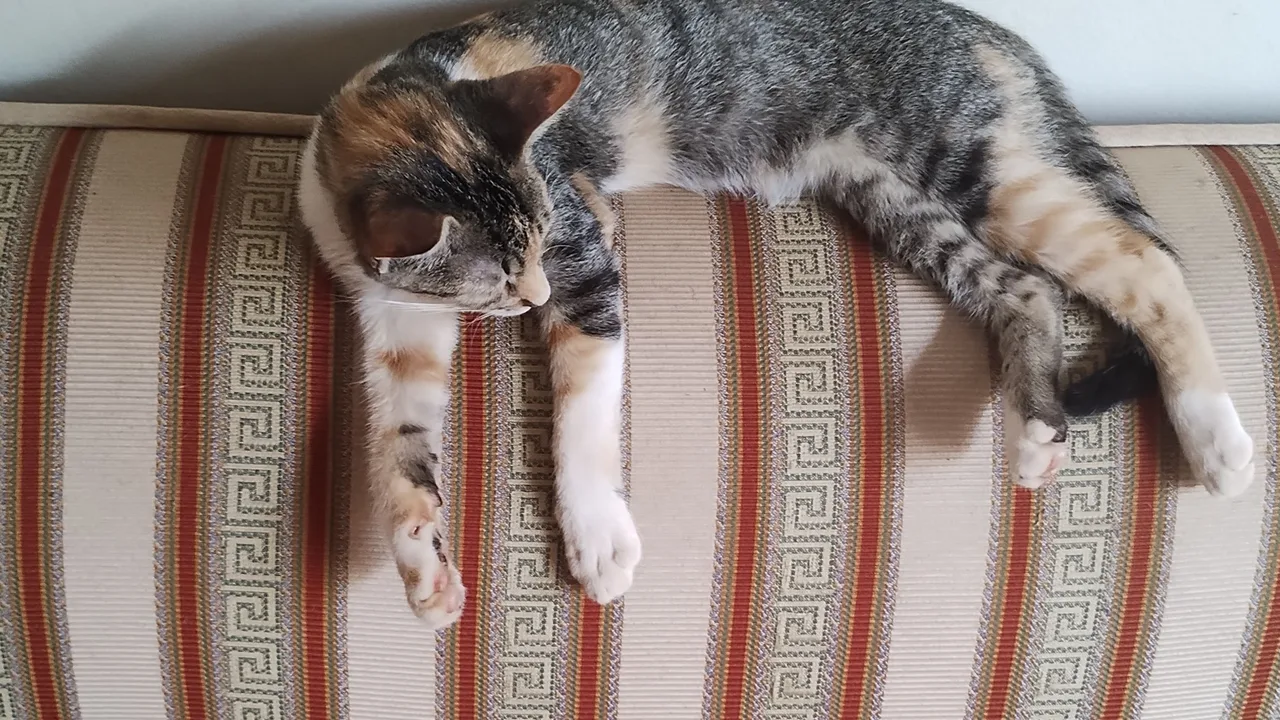
Agora é você quem escreve. A foto aparece só por uma janela de 10%; responda em inglês com o que dá para ver, ou peça para ver mais: 25%, 50%, 75% ou a foto inteira. Quanto menos você abrir, mais o acerto vale: 100 pontos com 10%, 10 pontos com a foto inteira. A frase inteira conta: There is a cat on the sofa. Coisa certa com a frase errada vale metade: o tem traduzido (Has a cat, There have a cat) ou a concordância trocada (There is two planes). Repare se é uma coisa só ou várias antes de escolher entre is e are.
 10%
10%Foto: Luciane Vilarinho / Pexels
There is e there are em trinta segundos
There is e there are são o verbo to be com um there na frente, e o there aqui não quer dizer lá: ele só ocupa o lugar do sujeito, porque em inglês toda frase precisa de um. Quem decide entre is e are é a coisa que vem depois. Para pensar em português: quase sempre que você diria tem, há ou existe sem ninguém dono da coisa, o inglês diz there is ou there are.
| Forma | Singular (uma coisa) | Plural (várias) |
|---|---|---|
| Afirmativa | There is a bank. (There's) | There are two banks. |
| Negativa | There isn't a bank. / There is no bank. | There aren't any banks. / There are no banks. |
| Pergunta | Is there a bank? | Are there any banks? |
| Resposta curta | Yes, there is. / No, there isn't. | Yes, there are. / No, there aren't. |
| Passado | There was a bank. | There were two banks. |
| Futuro | There will be a bank. | There will be two banks. |
- There is: There is a bank near here. (Degrau 1)
- There are: There are two options. (Degrau 2)
- A negativa: There isn't any milk. There are no taxis. (Degrau 3)
- A pergunta: Is there a pharmacy? How many people are there? (Degrau 4)
- O passado: There was a party. There were many people. (Degrau 5)
- O futuro e o has been: There will be a test. There has been an accident. (Degrau 6)
Degrau 1: there is, o “tem” e o “há”
There is + uma coisa diz que ela existe, ou que está em algum lugar: There is a bank near here, tem um banco aqui perto. Na fala, quase sempre vira there's. Vale também para o que não se conta, como água, leite, tempo e dinheiro: There's some coffee, There is water on the table. A armadilha é o português. Como a gente diz tem, o brasileiro procura o have: Has a bank here. E quem lembra que precisa de sujeito ainda tenta There has a bank, ou recorre ao exist: Exists a problem. As três estão erradas. Have é posse, e precisa de um dono: I have a car. Sem dono, é there is.
| Português | Inglês | Repare |
|---|---|---|
| Tem um banco aqui perto. | There is a bank near here. | Nunca Has a bank near here. |
| Há um problema. | There is a problem. | Nunca Exists a problem. |
| Tem café na garrafa. | There's some coffee in the flask. | Café não se conta: there is. |
| Existe uma regra para isso. | There is a rule for that. | Existir também é there is. |
| Eu tenho um carro. | I have a car. | Aqui tem dono: é posse, é have. |

- Pergunte: tem alguém dono da coisa na frase? Se tem, é have: The hotel has a pool, o hotel tem piscina.
- Se não tem dono, só a existência, é there is: There is a pool in the hotel, tem piscina no hotel.
- As duas frases dizem quase a mesma coisa, mas Has a pool in the hotel, sem dono nenhum, não existe.
Degrau 2: there are e a concordância
Com mais de uma coisa, o is vira are: There are + plural. There are two cats, There are many people here. Quem manda é o que vem logo depois: there is a cat, there are two cats. Numa lista, o inglês concorda com o primeiro item: There is a sofa and two chairs, mas There are two chairs and a sofa. E não existe contração escrita de there are: na fala sai parecido com there're, mas na escrita fica there are. É o que a Anna e o Mark fazem o texto inteiro: there is para o Coliseu e a Torre Eiffel, there are para as igrejas, os museus e as pontes.
| Em vez de | Diga | Em português |
|---|---|---|
| There is two cats. | There are two cats. | Tem dois gatos. |
| There are a problem. | There is a problem. | Tem um problema. |
| There are some milk. | There is some milk. | Tem leite. (leite não se conta) |
| There is many people. | There are many people. | Tem muita gente. |
| There are a sofa and two chairs. | There is a sofa and two chairs. | Tem um sofá e duas cadeiras. |
- Na fala rápida, muito nativo diz there's two of them, com o there's no plural. Acontece, e ninguém estranha numa conversa.
- Na escrita, no e-mail de trabalho e na prova, é there are. Aprenda o certo; o informal vem sozinho.
Texto 1: Paris or Rome? (A1)

💡 Nível A1. Toque em qualquer palavra para ver a tradução, ou dê play e ouça a Anna e o Mark, cada um com a sua voz. Separe as frases em duas colunas: as com there is e as com there are.
?
Anna ! , .
Mark! . .
Anna! . , .
Mark , , .
Anna . .
Mark! . , .
Anna ? ?
Mark. . , , .
Anna , , . .
Mark , ! .
Anna. .
Mark?
Anna , .
O “tem” que não é have, e o is ou are de acordo com o que vem depois.
A pronúncia: there's, there are e o th
O th de there é o som com a língua entre os dentes, vibrando, e não um d: nem dér, nem zér. Na frase, there is encolhe para there's (dhérz), e there are sai quase como uma sílaba e meia, dhér-ra. Repare também que there, their e they're soam iguais: o que separa é a escrita, não o som. Ouça cada um e repita.
Degrau 3: there isn't, there aren't e there is no
Para dizer que não tem, o inglês oferece dois caminhos. O primeiro é negar o verbo: there isn't e there aren't, quase sempre com any no plural e no que não se conta: There aren't any eggs, There isn't any milk. O segundo é negar a coisa: there is no / there are no, There's no time, There are no taxis. O sentido é o mesmo; o no soa um pouco mais firme. Dois erros derrubam o brasileiro aqui. O primeiro é traduzir o não tem com have: Don't have a bank here. O segundo é negar duas vezes, como em português: There isn't no milk. Em inglês, uma negação basta: ou isn't any, ou is no.
| Em vez de | Diga | Em português |
|---|---|---|
| Don't have a bank here. | There isn't a bank here. | Não tem banco aqui. |
| There don't have milk. | There isn't any milk. / There's no milk. | Não tem leite. |
| There isn't no time. | There's no time. / There isn't any time. | Não dá tempo. |
| Haven't taxis here. | There aren't any taxis here. | Não tem táxi aqui. |
| There isn't nobody. | There's nobody here. / There isn't anybody. | Não tem ninguém. |
Degrau 4: Is there…? Are there…? A pergunta e a resposta curta
Para perguntar, o is ou o are pula para a frente: Is there…? / Are there…?. Is there a pharmacy near here?, Are there any questions?. Não entra do, e muito menos have: Have a pharmacy here? é o tem farmácia aqui? traduzido palavra por palavra. A resposta curta repete o there e o verbo: Yes, there is. / No, there aren't. Para perguntar quantidade, How many + plural + are there?: How many people are there?, com o are there no fim. É a conversa inteira do Tom e da Zara: um pergunta o que tem no planeta do outro, e a resposta sempre começa com Yes, there are ou No, there isn't.
| Pergunta | Resposta curta | Em português |
|---|---|---|
| Is there a pharmacy near here? | Yes, there is. / No, there isn't. | Tem farmácia aqui perto? Tem. / Não tem. |
| Are there any eggs? | Yes, there are. / No, there aren't. | Tem ovo? Tem. / Não tem. |
| Is there any coffee left? | Yes, there is. / No, there isn't. | Sobrou café? |
| How many moons are there on Mars? | There are two. | Quantas luas tem em Marte? Duas. |
| What is there to do here? | There's a lot to do. | O que tem para fazer aqui? Tem muita coisa. |
Texto 2: Are You from Mars? (A2)

💡 Nível A2. Toque em qualquer palavra para ver a tradução, ou dê play e ouça o Tom e a Zara, cada um com a sua voz. Conte as perguntas com Is there e com Are there, e repare que toda resposta repete o there.
?
Tom! ?
Zara, ! , ? ?
Tom, . . ?
Zara, . . . !
Tom ?
Zara, . , . , .
Tom . ?
Zara, . , . ?
Tom . . ?
Zara, . , .
Tom . ?
Zara, . , .
Tom ?
Zara . , !
Tom . ?
Zara, . ?
Tom, . !
Jogo em dupla: How many moons are there?
Depois da Zara, a vez é de vocês. Dois alunos, cada um no seu celular: um é o Jogador A, o outro é o B. Cada um sabe quantas luas têm quatro planetas e não sabe as dos outros quatro. Para descobrir, pergunte ao colega em inglês, How many moons are there around Saturn?, e escute a resposta: There are 293 moons around Saturn, There is one moon around Earth ou There aren't any moons around Venus. Digite o número e passe a vez. Os números são os da NASA em 2026, e alguns vão surpreender.
Jogo em dupla, cada um no seu celular. Um é o Jogador A, o outro é o B: cada um sabe as luas de quatro planetas e descobre as outras quatro perguntando ao colega, em inglês.
Uma negação só, e o is ou o are na frente, sem do e sem have.
Degrau 5: there was e there were, o “tinha” e o “teve”
No passado, o is vira was e o are vira were: there was para uma coisa, there were para várias. There was a party last night, teve uma festa ontem. There were many people, tinha muita gente. A negativa e a pergunta seguem o mesmo molde do presente: There wasn't any food, Were there many people?. Aqui o português arma a pior das armadilhas. Como o passado de tem é tinha ou teve, o brasileiro vai direto no passado de have: There had a party, Had many people. Em inglês não existe there had com esse sentido. Teve festa é there was a party.
| Português | Inglês | Repare |
|---|---|---|
| Teve uma festa ontem. | There was a party yesterday. | Nunca There had a party. |
| Tinha muita gente. | There were many people. | Nunca Had many people. |
| Não tinha comida. | There wasn't any food. | Nunca There didn't have food. |
| Tinha banco na sua rua? | Was there a bank on your street? | Nunca Had a bank on your street? |
| Teve algum problema? | Was there a problem? | A resposta: Yes, there was. / No, there wasn't. |
- Para dizer que antigamente tinha e hoje não tem mais, o inglês usa there used to be: There used to be a cinema here, aqui tinha um cinema.
- There was a cinema também está certo; o used to só deixa claro que não existe mais.
O “tinha” e o “teve” sem o have.
Degrau 6: there will be, there's going to be e there has been
Para o futuro, there will be, com o be sempre na forma base, singular ou plural: There will be a test on Friday, There will be two exams. Na fala, vira there'll be. Quando o futuro já está à vista ou combinado, o inglês também diz there's going to be: Look at the sky. There's going to be a storm. E há o tempo que o português resolve com teve ou houve e o inglês com o present perfect: there has been / there have been, para o que aconteceu num período que ainda não acabou: There has been an accident on the highway, There have been a lot of changes since I left. O erro do brasileiro, de novo, é o vai ter traduzido ao pé da letra: There will have a test. O have não entra; o que fica depois do will é o be.
| Tempo | Forma | Exemplo |
|---|---|---|
| Futuro | there will be | There will be a test on Friday. |
| Futuro (negativa) | there won't be | There won't be time for questions. |
| Futuro (pergunta) | Will there be…? | Will there be food at the party? |
| Futuro já à vista | there's going to be | There's going to be a storm. |
| Até agora | there has been / there have been | There have been a lot of changes. |
Texto 3: The Street Where I Grew Up (B1)

💡 Nível B1. Toque em qualquer palavra para ver a tradução, ou dê play para ouvir. O primeiro parágrafo é o passado (there was, there were); o segundo mistura o has been com o presente; o último é o futuro (there will be, there's going to be).
, . , . , .
. . , . , , .
? . . , , . . , .
. , . , . . , .
O “vai ter” e o “teve, até agora”, sempre com be.
Os seis erros que entregam o brasileiro
- has, have ou exist no lugar do there is: Has a bank here, Exists a problem. Sem dono, é There is a bank here. (Degrau 1)
- there is com plural: There is two options. Plural pede There are two options. (Degrau 2)
- don't have e a dupla negação: Don't have milk, There isn't no milk. É There isn't any milk ou There's no milk. (Degrau 3)
- Have…? na pergunta: Have a pharmacy here? A pergunta é Is there a pharmacy here? (Degrau 4)
- there had: There had a party. O teve e o tinha são There was a party. (Degrau 5)
- there will have: There will have a test. O vai ter é There will be a test. (Degrau 6)
There is no trabalho: fatos, riscos e opções
Em reunião e em e-mail, there is / there are é como você apresenta um fato sem apontar culpado: There's a risk we miss the deadline, There are three options on the table, There have been some delays with the supplier, There will be a short break at eleven. Compare com We have a risk ou The supplier delayed: a frase com there põe o problema na mesa sem colocar ninguém no banco dos réus. É por isso que ela aparece tanto em relatório e em pauta de reunião.
Para continuar praticando
O there is tem páginas de apoio aqui no site: um texto longo sobre quatro cidades feito quase só de there is e there are, as duas páginas dos diálogos com a atividade de dupla para a sala, uma leitura B1 sobre indicadores de RH e os assuntos que andam junto, como some e any, much e many e o próprio verbo have.
Perguntas frequentes
Qual a diferença entre there is e there are?
Por que não posso usar have para dizer tem?
Como fica there is no passado?
Como se diz vai ter em inglês?
There isn't any ou there is no?
Existe contração de there are?
Qual a diferença entre there, their e they're?
Usar o there is falando, não só lendo
No quiz você escolhe a forma certa com calma. Na reunião ou no balcão, o “tem” sai antes de você pensar, e é aí que escapa o has a ou o there had. Isso se treina em voz alta, com alguém corrigindo o reflexo.
Quero uma aula testePratique inglês com música e jogos no Fill The Song — outra ferramenta gratuita da nossa rede. E se o objetivo é evoluir para o trabalho, conheça o curso de inglês para executivos da Lingualize.
Procurando aulas? Veja a aula particular de inglês, a aula de conversação e todas as aulas da Lingualize.